
What is a smartlink?
A smartlink is a dynamic affiliate link that automatically sends a visitor to the offer or flow most likely to convert. Instead of manually assigning one landing page to one campaign, affiliates can use a single link that evaluates traffic signals such as GEO, device type, operating system, browser, and sometimes user behavior.
In practice, that means less manual funnel building and faster monetization. Rather than creating separate routing logic for every audience segment, a smartlink system handles distribution on the backend and helps match traffic with a more relevant destination.
Why affiliates use smartlinks
The biggest advantage is efficiency. Smartlinks make it easier to launch traffic quickly, test multiple markets, and reduce the amount of time spent on repetitive setup. They are especially useful for affiliates who want a faster path from traffic source to monetization.
- They lower the technical barrier for launching campaigns.
- They simplify testing across multiple GEOs and devices.
- They help reduce wasted traffic by improving routing logic.
- They are useful for affiliates who want speed, flexibility, and easier optimization.
How a smartlink works in real traffic flow
A user clicks your tracking link, the system reads traffic attributes, and then the platform decides which path should be shown. That path may include a prelanding page, a direct offer page, or a tested funnel sequence selected according to current performance data.
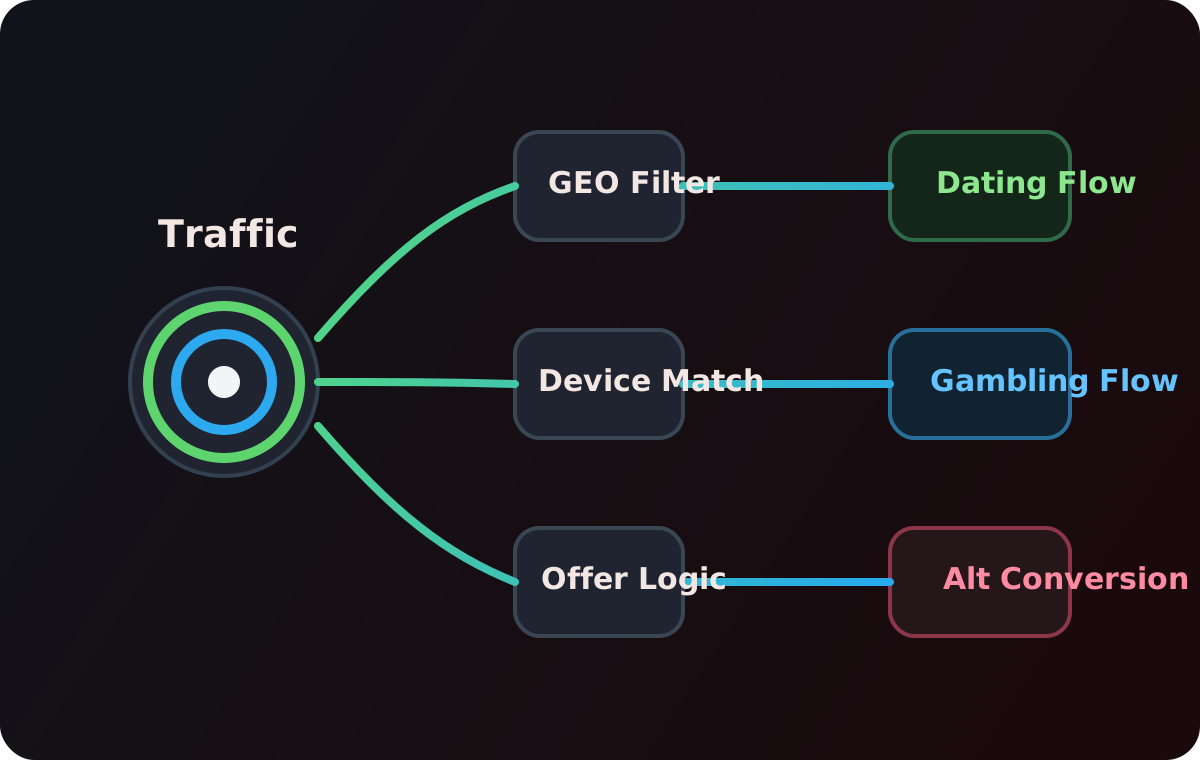
This routing logic matters because not all traffic behaves the same way. Mobile traffic in one country may convert on a different offer than desktop traffic in another region. Smartlinks are designed to make that decision layer more adaptive.
Where smartlinks are most useful
Smartlinks are often a strong fit for verticals where speed, testing, and traffic matching are critical. That includes niches like Dating and Gambling, where audience intent, device behavior, and regional patterns can shift quickly.
They are also useful when an affiliate wants to validate a new source, try broader campaigns, or avoid building separate funnels for each small variation in traffic quality.
Benefits beyond simple routing
Good smartlink systems are not only about redirects. They usually come with tested funnels, creative logic, reporting depth, and optimization feedback. That broader infrastructure is part of why many affiliates see smartlinks as a performance tool, not just a convenience tool.
- Faster campaign launch without heavy manual preparation.
- Broader monetization coverage for mixed or global traffic.
- Cleaner testing process across devices, GEOs, and verticals.
- Better visibility into what converts and where to scale next.
How to work with a smartlink more effectively
Smartlinks still need strategy. Affiliates get better results when they understand their traffic source, keep testing creative angles, and compare performance by GEO, device, and campaign structure. A smartlink is not a substitute for traffic quality, but it can increase the odds that good traffic reaches a better match.
It also helps to work with a network that provides responsive managers, clear reporting, and flexible deal models. That way, when performance changes, you are not optimizing alone.
Common mistakes to avoid
- Sending traffic without segmenting source quality.
- Judging performance too early before traffic stabilizes.
- Ignoring device and GEO differences in campaign analysis.
- Using a smartlink as a shortcut instead of a structured monetization tool.
Final take
Smartlinks are valuable because they combine convenience with performance logic. For affiliates who want to monetize traffic faster, test markets more efficiently, and reduce funnel complexity, they can be a strong operational advantage. When paired with quality traffic, clear reporting, and active support, smartlinks can become a reliable part of a scalable affiliate workflow.
If you want to explore flexible models and partner support around smart monetization, you can return to the main CPAGEN page or browse more topics in the CPAGEN Blog.